Hartl and Entwistle, eds.
Table of Contents
"Lexington Books takes great pride in its unwavering commitment to publishing specialized research essential to advancing scholarship at a time when many academic publishers have abandoned this part of their programs. We continue to publish high-quality monographs and edited collections by established and emerging scholars, works that may not have a wide audience but make a significant contribution to scholarship in the humanities and social sciences." From the publisher's website.
Foreword
by Michael Beckerman
Introduction: Vitezslava Kapralova: A Biographical Sketch
by Karla Hartl
Part One
Chapter One: Kapralova in the Context of Czech Music
by Jindriska Bartova
Chapter Two: Kapralova's Piano Works
by Erik Entwistle
Chapter Three: Navzdy (For Ever) Kapralova: Reevaluating the Czech Composer through Her Songs
by Timothy Cheek
Chapter Four: Kapralova and the Czech Tradition of Melodrama
by Judith Mabary
Chapter Five: Sinfonietta, Partita, Suita: Kapralova's Orchestral Works
by Judith Mabary
Part Two
Section One: Vitezslava Kapralova: An Annotated Life Chronology
by Karla Hartl
Section Two: Vitezslava Kapralova: An Annotated Catalog of Works
by Karla Hartl
Section Three: Vitezslava Kapralova: Comprehensive Bibliography
by Karla Hartl
Section Four: Vitezslava Kapralova: Published Works
by Karla Hartl
Section Five: Vitezslava Kapralova: Discography
by Karla Hartl
Acknowledgements
Appendix A: Bibliography
Index
About the Authors
Research published in this book has been assisted by the Kapralova Society. 
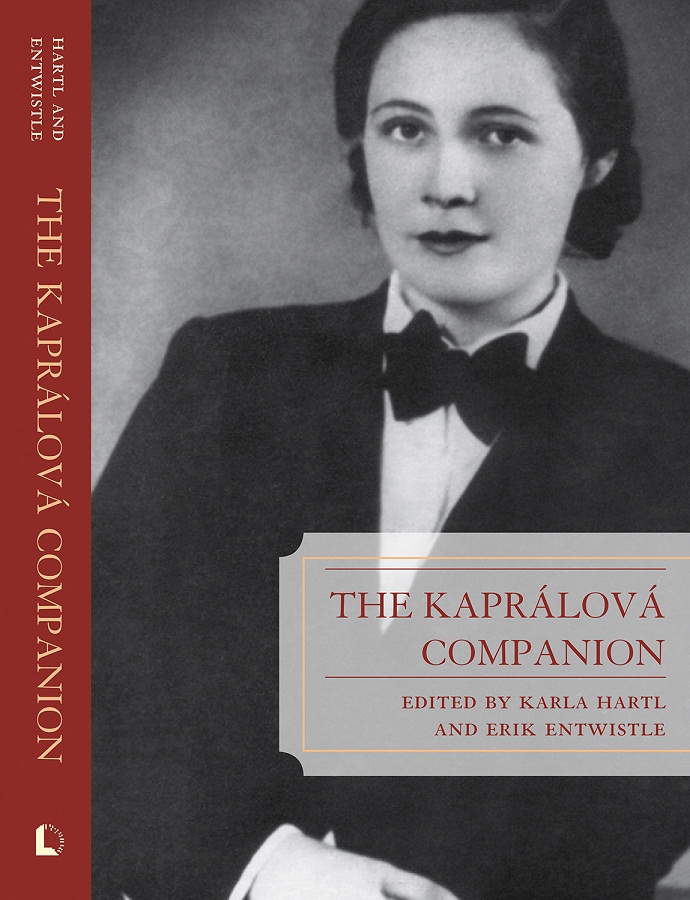
PREVIEWS
A remarkable book! Since her death at age twenty-five in the midst of WWII, Kapralova's brilliant musical legacy and story have fallen through the cracks. But now this book brings her music, in all its variety and power, to the fore. This collection, by a range of distinguished scholars, offers insights and investigation into Kapralova'S creative work and life. Nothing short of a revelation!--Liane Curtis, Brandeis University
This volume is the first scholarly effort in English attempting to put the puzzle of Kapralova together in a coherent form. It represents the collective thought of the most serious scholars who have devoted themselves to studying Kapralova and her work, and sets a high standard for those to follow.--Michael Beckerman, New York University
Karla Hartl and Erik Entwistle'S The Kapralova Companion is a superb, long overdue contribution to the studies of women in music in general and, specifically, to the analysis of the remarkable composer Vitezslava Kapralova. A thorough, well-written, and insightful guide.--Michelle Latour, UNLV
FROM REVIEWS
Vitezslava Kapralova was a remarkable personality, a gifted composer-conductor who died much too young. But so did Keats, Schubert, and even Otis Redding. Once we get over how young she was, there is her music and artistic activity to consider. This volume is a splendid introduction to her life and work, by the leading specialists in the field. Hopefully it will be the first of many volumes dealing with her life and music.--Michael Beckerman, amazon.com
Well written and informative.--Susan E. Pickett, amazon.com
Vítezslava Kaprálová was a Czech conductor and composer who wrote exquisite vocal and instrumental music. This book provides detailed information about her life and musical career, and is a great addition to one's music library!--Chris T. for amazon.ca
[...] Jindriska Bartova signe un excellent article replacant Kapralova dans le contexte de la musique tcheque de son epoque. Tout l'interet du travail de la musicologue reside dans le fait qu'elle ne tient (heureusement) pas uniquement compte des "grandes figures" nationales mais qu'elle considere surtout les artistes qui ont influence - directement ou non - la jeune Vitezslava. Beaucoup ont ete eleves de Janacek (comme Vaclav Kapral, pere de Kapralova, base a Brno), meme si certains ont pris leurs distances par rapport a la pensee et a l'esthetique du compositeur de Jenufa. Dans son analyse des pages pianistique de "Vitulka", Erik Entwistle examine lui aussi les oeuvres paternelles pour trouver les traces tangibles d'une influence naturelle. Allant bien plus loin que l'etude que Ludvik Kundera (ami de Kapralova et pere de Milan Kundera) avait consacre au meme sujet dans le livre de Premysl, Entwistle explore avec brio un repertoire bigarre contenant quelques chefs-d'oeuvre (dont les Preludes d'avril et les Variations sur le carillon de Saint-Etienne du Mont). Judith Mabary signe quant a elle deux articles tout aussi passionnants. Le premier concerne les essais et intentions de Kapralova en matiere de melodrame, genre souvent aborde par les Tcheques, de Benda au jeune Martinu en passant par Dusek - si la jeune femme ne concretisa qu'un seul de ses projets dans le genre, d'autres pieces furent transformees en melodies geniales. Dans sa seconde etude, Mabary analyse les trois pieces orchestrales importantes que sont la Vojenske Symfonieta [Sinfonietta militaire], la Partita op.20 composee sous le tutorat de Martinu et la Suita Rustica, page d'inspiration folklorique influencee par Stravinsky (non-editee a ce jour). S'il est difficile de faire le tour complet de la question en un peu moins de trente pages, la musicologue pose de solides bases pour les futures recherches analytiques autour de ces oeuvres.--Nicolas Derny, forumopera.com
This immensely valuable work deserves a place on the shelves of every serious follower of Czech music. What adds inestimably to the value of the book is the quality of the contributors. Packed with vital information about a little known but important composer of the first half of the 20th century, this volume should stand as a signpost for future scholars to delve into a surprisingly important life.--Peter Herbert, Dvorak Society Newsletter
Die Herausgeber Hartl und Entwistle trugen eine Reihe von Gelehrten aus den USA, Kanada und der Tschechischen Republik zusammen, deren Beitrage eine aussagestarke Vielfalt abdecken, die fur Kapralova und ihre Zeit charakteristisch sind. Herausgekommen ist eine Publikation, die sowohl Startpunkt fur Wissenschafter und Musikliebhaber ins Thema ist, als auch kritische Essays enthalt, die zum Nachdenken anregen.--VivaVoce
Kniha je vysledkem badani prevazne zahranicnich odborniku, Vitezslava Kapralova se tak dostala mezi ty nemnohe ceske skladatele, o nichz vysly monografie v cizim jazyce, a to nejen monografie prelozene z puvodni ceske predlohy, ale sepsane v cizine, tedy Dvoraka, Janacka a Martinu. Kniha byla velmi kladne hodnocena svetovymi recenzenty, v Cesku byla navrzena na Cenu F. X. Saldy, ktera je udelovana mimo jine za mimoradne edicni pociny.--Monika Hola, Opus Musicum
Vitezslava Kapralova's music is beautiful, haunting, and distinct, and deserves to be heard more frequently on concert hall stages across the U.S. One hopes that this long-awaited and superbly-written book will provide inspiration and motivation to those who are interested in learning more about this composer.--Michelle Latour, Journal of the IAWM
The first and only major study of Kapralova in English. One cannot understand Martinu's relationship without knowing Kapralova first. Karla Hartl provides the foundation of the work, supplying a biography, annotated chronology, complete catalog of works, a comprehensive bibliography, and discograghy. Supporting essays by Jindriska Bartova, Erik Entwistle, Timothy Cheek, and Judith Mabary offer excellent in-depth studies of her works. An expansive index can help the reader navigate mentions of Martinu, but the entire book is relevant to the study of both composers.--Robert Simon. Bohuslav Martinu: A Research and Information Guide. NY: Routledge, 2014, p. 221.
This well-compiled, scholarly publication provides the ideal primer for those
wishing to explore the life and music of Vítezslava Kaprálová. Thoroughly
researched, insightful and comprehensive it provides the perfect overview of
the most significant female composer in the history of 20th century Czech music.
Stephen Greenbank, MusicWeb
Published by Lexington Books, an imprint of Rowman & Littlefield in 2011. xi, 228 pp. ISBN 978-0-7391-6723-6 (cloth) - ISBN 978-0-7391-6724-3 (electronic).